Origin options
- South and East China origins including Guangzhou, Shenzhen, Shanghai and Ningbo
- Ports including Nansha, Yantian, Shekou, Shanghai and Ningbo-Zhoushan
- International airports in Guangzhou, Shenzhen and Shanghai

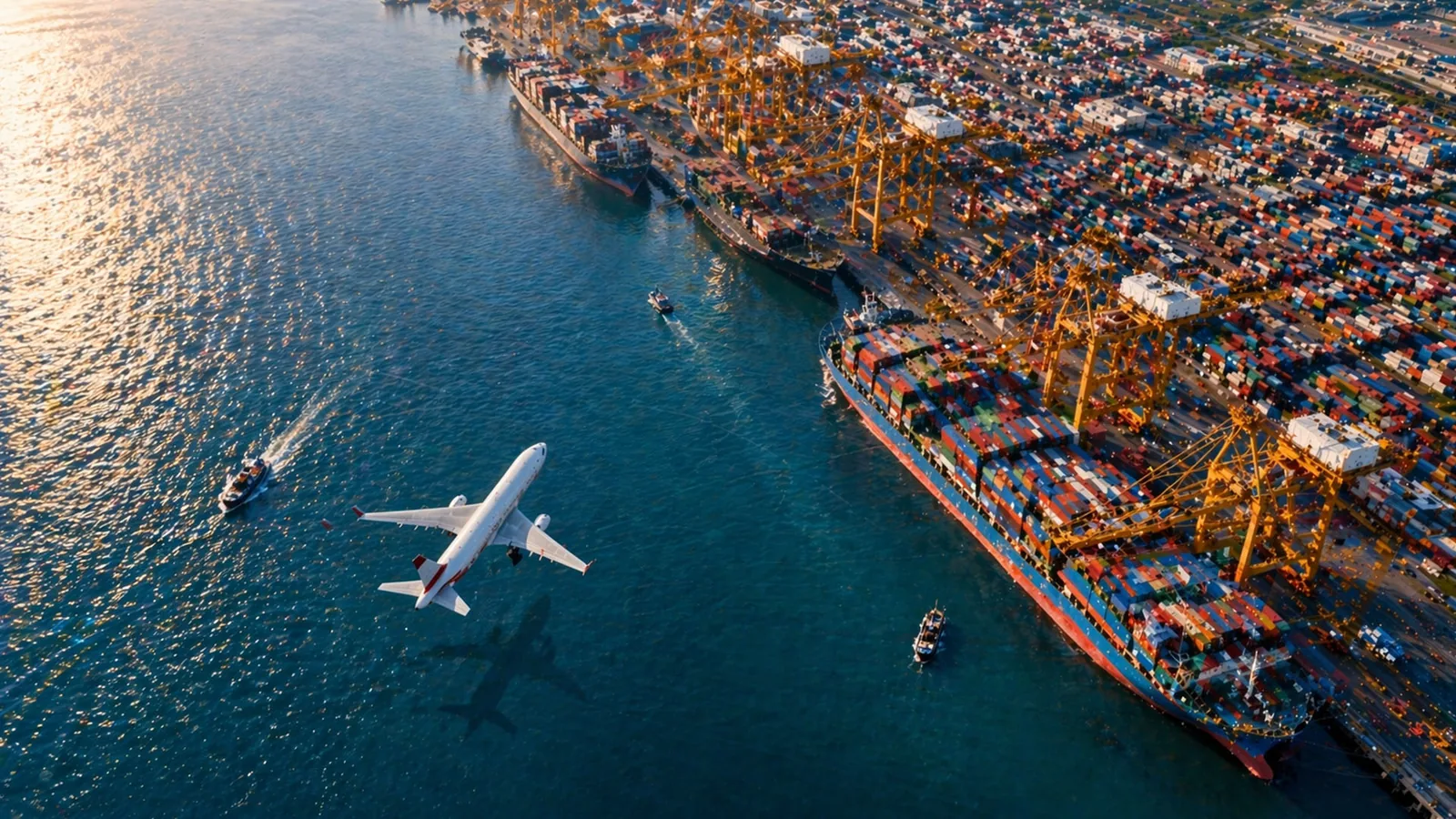
Plan shipping from China to Canada by ocean FCL/LCL, air freight or door delivery. Confirm the destination gateway or final postcode, cargo data, customs preparation and the inputs needed for a live quote.
Ocean FCL may suit larger or handling-sensitive cargo; LCL may suit smaller batches; air freight may suit urgent or high-value shipments. The final choice depends on packed dimensions, gross weight, cargo characteristics and required arrival timing.
Canadian import requirements vary by product, use, material and importer status. Provide accurate product names, materials, use and declaration details.
Ocean FCL, ocean LCL, air freight and multimodal options may be reviewed depending on cargo volume, timing and final delivery scope.
Provide origin, destination, product, packing, dimensions, weight, CBM, cargo-ready date, Incoterm and delivery scope.
Use these concise answers to compare modes and prepare an RFQ. Live schedules, space, customs scope and the final price still need shipment-specific confirmation.
There is no reliable fixed rate detached from the live shipment. A usable quote needs the actual origin, destination, product, pieces, gross weight, CBM, mode, Incoterms, cargo-ready date and final-delivery scope.
There is no single transit window for every origin and service scope. Confirm the actual origin, destination gateway, ocean or air mode, sailing/flight and final-delivery scope.
FCL is normally considered for larger volumes or dedicated-container needs; LCL for smaller cost-sensitive cargo; air for urgent, higher-value or lower-volume shipments. Compare total delivery time and destination costs, not the headline freight charge alone.
Yes, shipment by shipment. The review depends on the cargo, importer, destination rules, tax responsibility and final address. DDP is not presented as a blanket guarantee for every commodity or destination condition.
Start with the commercial invoice, packing list, precise product description, use/material, HS code when known, transport-document requirements and importer details. Product permits, certification and labeling must be confirmed for the actual commodity.
Compare the final city or postcode, importer location, cargo volume, mode and available schedules. Use total main-carriage, destination-handling and last-mile cost rather than choosing a gateway by map distance alone.
This page is a shipment-planning and quotation guide, not a fixed-rate tariff. Transit windows are drawn from Harchen’s maintained route reference data; the live sailing or flight, transshipment, space and destination handling still need confirmation before booking.
Choose the mode around volume, delivery deadline, destination node and customs/final-delivery scope rather than comparing one headline freight number.
Reference windows are not a delivery guarantee. Confirm the actual origin, destination, schedule/flight and service scope before booking.
These gateways come from the destination ports and cargo airports maintained in Harchen’s current market data and help make a quote request specific.
We do not publish a fixed rate detached from the live shipment. Total landed logistics cost normally changes with origin pickup, chargeable weight or CBM, mode/equipment, space and season, destination handling, customs scope and final delivery.
A precise request is easier to compare and execute. If some details are not ready, start on WhatsApp and add the packing list later.
Customs preparation should be based on the real product description, HS classification, commercial invoice, packing list, transport document, importer details and any product-specific destination requirements. Licensing, certification, valuation, duty and restricted-goods questions must be confirmed for the actual commodity with the destination importer or qualified customs professional.
Harchen can coordinate freight and document preparation, while destination import licensing, duty, product certification and final customs decisions must be confirmed for the actual commodity and importer.
Send the actual origin city or port, destination port/airport or final postcode, product, packages, gross weight, CBM, cargo-ready date and Incoterms. Rates and capacity move, so the quote should be built for the live shipment.
Larger and cost-sensitive cargo normally starts with an ocean comparison; urgent, higher-value or smaller shipments can be compared by air. Use total delivery time and destination cost, not freight price alone.
Yes, door-to-door, DAP or DDP can be reviewed against the actual commodity, importer, destination address and tax responsibility. The same structure is not suitable for every product or destination.
No. They are planning references and can change with sailing or flight schedules, transshipment, weather, congestion, inspection, customs clearance and final delivery.
Yes. Start with the approximate route and cargo on WhatsApp, then add the packing list, dimensions, HS code or final address when available.
No need to complete a long RFQ before we talk. Share the approximate origin, destination and cargo; incomplete shipment details are fine.